
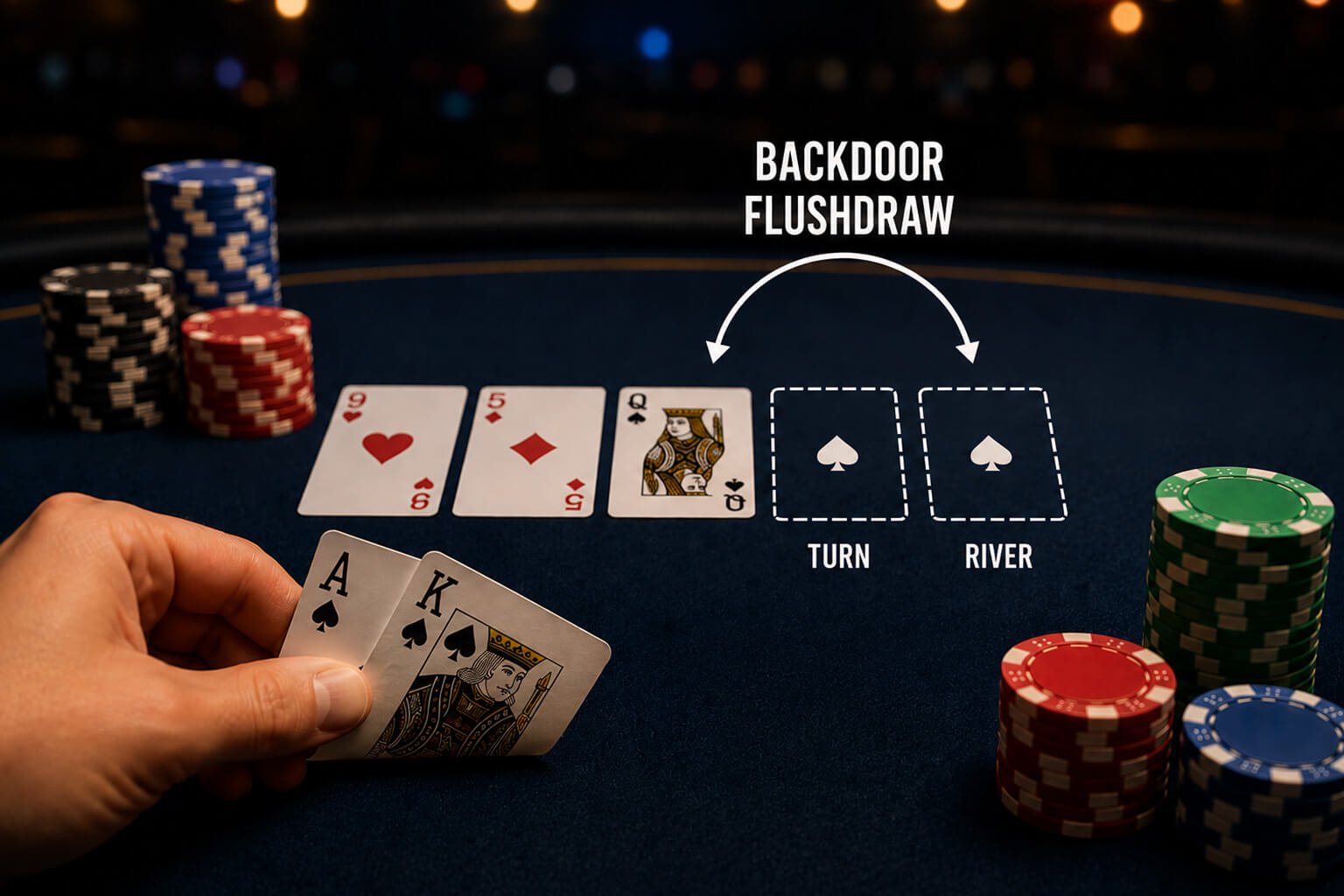
If you’re new to poker or just trying to sharpen your skills, you might have come across the term backdoor flush draw. It’s a concept that often pops up during poker commentary and strategy discussions, but what exactly does it mean? And why is it worth understanding? In this article, we break down the backdoor flush draw in a beginner-friendly way to help you recognize it, use it, and improve your poker game.
What Is a Backdoor Flush Draw?
In poker, a flush is when you have five cards of the same suit. A flush beats many hands and can often win big pots. Now, a flush draw means you currently don’t have five suited cards, but you could make a flush by catching one or two more cards of the same suit on upcoming streets.

A backdoor flush draw refers to a specific situation where you don’t have a flush draw on the flop (the first three community cards), but you can still make a flush by hitting two suited cards in a row on the turn and river (the next two community cards). In other words, the flush is possible only if you catch cards on both remaining streets.
This is different from a flush draw or open-ended flush draw, where you already have four suited cards and need only one card to complete the flush.
How to Identify a Backdoor Flush Draw
Identifying a backdoor flush draw is easier than it sounds once you know what to look for. The key idea is that on the flop you hold exactly three cards of the same suit combined between your hand and the board (community cards), but you need both the turn and the river to be that same suit to complete your flush.
For example, imagine you hold ♥A♥9, and the flop comes ♠5♥7♣2. Among these cards, you only have two hearts (your two hole cards plus the one heart on the board), which means you don’t have an immediate flush draw. But there’s still a chance to make a flush if the next two cards (turn and river) are both hearts — this is your backdoor flush draw.

Backdoor Flush Draw vs. Regular Flush Draw
- Regular flush draw: You already have four suited cards between your hole cards and the flop. You need only one more card of that suit to complete a flush. For example, if you hold ♥A♥9 and the flop is ♥5♥7♣2, you have four hearts and just need one more heart to hit your flush. This gives you many outs—9 cards of the same suit remain in the deck.
- Backdoor flush draw: You have only three suited cards after the flop, so you need to catch two consecutive suited cards on the turn and river. This makes it a less likely and generally weaker drawing hand.
Why Does the Backdoor Flush Draw Matter?
Since backdoor flush draws are relatively rare and harder to hit, you might wonder why they deserve your attention. The truth is, understanding and accounting for backdoor draws can help you make better decisions at the poker table, especially in no-limit hold’em.
Here’s why backdoor flush draws matter:
- Potential to improve: Even though the odds are longer, backdoor flush draws give you extra ways to improve your hand. This can sometimes justify a continuation bet or calling a bet on certain flop textures.
- Semi-bluff opportunities: With a backdoor flush draw combined with other draws (like a straight draw or overcards), you have a chance to bluff effectively if you miss your draws.
- Pot odds calculation: When you calculate pot odds, backdoor flush draws add extra equity. Knowing how much these draws contribute to your overall chance to win helps you decide whether to call, fold, or raise.
Backdoor Flush Draw Odds Explained
Since a backdoor flush requires you to hit two specific suited cards in a row, it’s less likely than hitting a one-card flush draw. But how unlikely is it exactly?
Assuming you have exactly three suited cards on the flop, here’s a rough estimate of your odds:
- Chance of hitting a suited card on the turn: About 19%
- If you do, chance of hitting another suited card on the river: Around 18%
- Multiplying these chances gives about a 3.4% chance of completing the backdoor flush by the river.
To put it simply, you will complete a backdoor flush about once every 30 times you see such an opportunity. This is clearly much less frequent than the one-card flush draw, which happens roughly 35% of the time when you have four suited cards.
Use our FREE Poker odds calculator to calculate your odds
Practical Example: Backdoor Flush Draw in Action
Let’s say you’re playing Texas Hold’em and have ♥K♥J in your hand. The flop comes ♣9♥7♦2. Here’s the breakdown:
- You have 2 hearts in your hand (K♥ and J♥).
- The flop has only one heart (7♥).
- Total hearts combined = 3 (which is less than four needed for a flush draw).
So, you don’t have a flush draw right now. But if the turn and river both bring hearts (say ♥4 and ♥8), you complete a flush — this is your backdoor flush draw coming through.
Depending on the action and pot size, you might want to play aggressively on the flop or turn, especially if you have other hand equity or drawing options. Otherwise, you have to consider whether chasing this draw is worth the risk.
Backdoor Flush Draws and Playing Style
How you approach backdoor flush draws depends on your playing style and the game situation:
- Loose Aggressive Players: You might chase backdoor flush draws more often, using them as semi-bluffs with the potential to hit big.
- Tight Players: Often, you’ll fold backdoor flush draws unless combined with strong additional equity to avoid chasing long shots.
- In Position: Being last to act gives you more control to see what your opponents do before committing to the turn and river.
- Stack Size Matters: With deeper stacks, chasing backdoor flush draws is more reasonable. With short stacks, focus on stronger draws and made hands.
When to Consider Backdoor Flush Draws in Your Decision-Making
Here are some practical tips on factoring backdoor flush draws into your poker decisions:
- Combine with Other Equity: Backdoor flush draws add value, especially if you also have outs to make two pairs, straights, or top pair.
- Bet for Value and Protection: On some boards, betting with a backdoor flush draw can protect your hand from opponents who might try to bluff.
- Consider Pot Odds and Implied Odds: If the pot is large compared to your call, it can be worth chasing backdoor draws. Also, think about how much more you can win if you hit your flush.
- Watch Opponents’ Range: On wetter boards where more draws are possible, a backdoor flush draw might be more meaningful.
Summary: Backdoor Flush Draws Are Like Bonus Outs
While not the strongest or most reliable draws in poker, backdoor flush draws are worth keeping in mind. They can offer you extra chances to win pots or add value to your hands when combined with other draws. Knowing how to spot these draws and their odds will improve your overall strategy and confidence at the poker table.
Next time you’re in a hand, look for opportunities where your cards and the board give you a backdoor flush draw. Understanding this concept might not change every hand you play, but it will certainly add to your toolbox and help you make smarter decisions.
Good luck at the tables, and remember: poker is as much about mindset and knowledge as it is about the cards!