
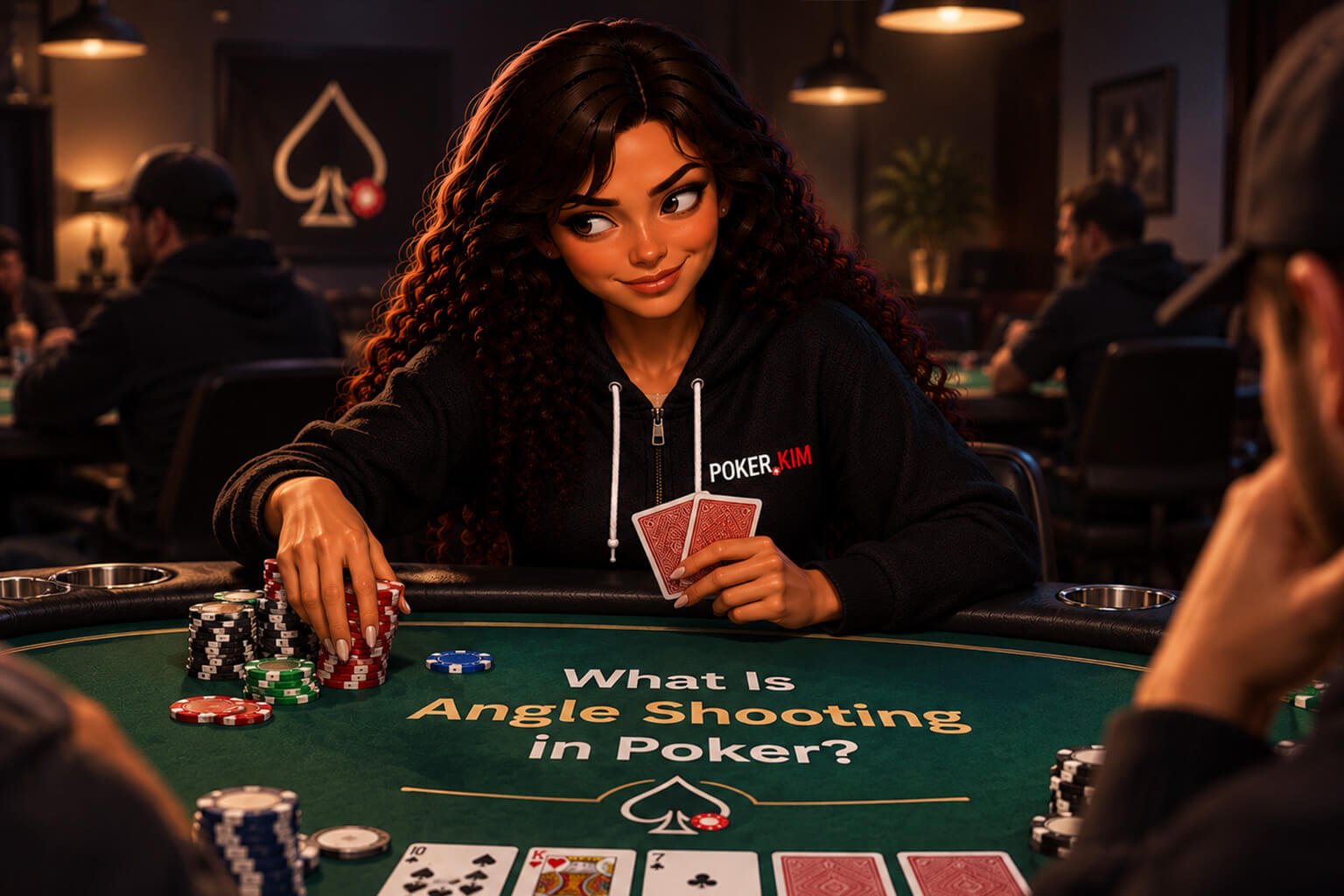
If you’ve recently started exploring the world of poker, you might have come across the term angle shooting poker and wondered what it really means. It’s a phrase you’ll hear among both casual and professional players, often whispered with a bit of disapproval. But what exactly is angle shooting, and why is it considered a tricky subject at the poker table? In this beginner-friendly guide, we’ll break down the concept, explain why angle shooting matters, and help you recognize it when it happens — so you can protect yourself and play with good poker etiquette.

What Is Angle Shooting in Poker?
Simply put, angle shooting poker refers to tactics or actions a player uses to gain an unfair advantage by bending or exploiting the rules and norms without technically breaking them. It’s a grey area between legal play and outright cheating.
Unlike illegal cheating — like marking cards or colluding — angle shooting works within the spirit of the rules but relies on deception, misinformation, or manipulation to trick opponents. It’s often viewed as unethical because it takes advantage of players’ trust and can damage the game’s integrity.
Why Does Angle Shooting Happen?
Poker is a game of skill, psychology, and strategy, but it also depends on the integrity and fairness among players. Since no dealer or official referee is always present in home games or informal settings, players sometimes try to push boundaries to rack up wins.
Angle shooting happens because:
- Players want to maximize winnings: A slight edge gained through deception can translate into significant money over time.
- Rules can be ambiguous: Social settings and different poker variants have unclear rules, leaving room for interpretation.
- Lack of enforcement: Without strict oversight, some players gamble on getting away with weakly unethical behavior.
- Psychological warfare: Some players use angle shooting as a mind game to intimidate, confuse, or steal pots.

Common Examples of Angle Shooting in Poker
Understanding angle shooting is easier when you see it in action. Here are some practical examples you might encounter:
1. Acting as if You Folded
This occurs when a player pretends to fold by pushing chips forward or moving their cards to the muck but doesn’t really drop out of the hand. Sometimes the player tries to act like they’ve folded to gain information from other players’ reactions or to confuse them before deciding to rejoin the hand.
Example: A player pushes their cards halfway toward the dealer, leading others to think they folded, then raises after seeing their opponents’ betting patterns.
2. Mucking Cards Before the Action Is Complete
“Mucking” means discarding your cards. Angle shooters might try to throw their cards in the muck prematurely to confuse other players about the strength of their hand or to see what cards come up next before officially folding.
3. String Betting
A string bet happens when a player makes multiple motions before officially putting chips into the pot, which can mislead opponents about the bet size or intentions. Although string bets might be legal in certain situations, angle shooters use delayed motion betting to see reactions or gain insight before committing.

4. Acting Out of Turn
Players acting out of turn might try to observe other players’ decisions before making their own move. For example, a player might reach for chips before it’s their turn to act, and based on others’ reactions, choose to call, raise, or fold.
5. Fake Actions
This includes behaviors like feigning confusion, pretending to have a different hand, or miscounting chips to throw opponents off balance.
Why Is Angle Shooting Considered Unethical?
Even though angle shooting often doesn’t involve breaking formal rules, it is frowned upon for several reasons:
- Violates Fair Play: Poker flourishes on honesty and clear communication. Angle shooting undermines that spirit.
- Harms Player Trust: It makes players feel tricked or cheated, which can ruin the social atmosphere at the table.
- Creates Confusion: New or less experienced players might not recognize angle shooting, leading to unfair losses and frustration.
- Slippery Slope: Tolerating angle shooting can encourage more blatant cheating or unethical behavior.
How to Recognize and Handle Angle Shooting
Spotting angle shooting takes awareness and understanding of common poker etiquette and rules. Here are tips to help you identify and respond if you face angle shooting:
Familiarize Yourself with the Rules
Knowing the basics of the poker variant you’re playing is crucial. Many angle shooting situations rely on exploiting unclear or misunderstood rules. If you know what constitutes legal play, you’ll be less vulnerable.
Watch Player Actions Closely
Keep an eye on opponents’ behavior, especially suspicious or inconsistent betting patterns and hesitation around bets. If someone consistently makes unclear or misleading moves, they may be angle shooting.
Stay Calm and Don’t React Emotionally
Angle shooters thrive on emotional reactions. If you sense someone is trying to manipulate you, stay composed and play your best game. Avoid getting into verbal disputes at the table, which can distract you and other players.
Politely Call It Out
If you’re confident a player is using angle shooting to take advantage, calmly address the issue. For example, you can say, “I noticed your bet was unclear—please clarify for the group.” This can deter players from pushing the boundary further.
Discuss House Rules Before Playing
When playing at home or in informal settings, set clear ground rules regarding betting procedures, what constitutes a fold, and other common spots for angle shooting. This reduces ambiguity and keeps everyone on the same page.
Report in Formal Settings
If you’re playing in a casino or a tournament and spot angle shooting, inform a floor supervisor or tournament director. They can enforce the rules and keep the game fair for all players.
Angle Shooting vs. Legitimate Bluffing and Strategy
It’s important to distinguish angle shooting from legitimate poker skills like bluffing and deception. Bluffing involves making your opponents believe you have a stronger or weaker hand than you actually do — but it’s done through betting patterns, timing, and psychology within the established rules.
Angle shooting, by contrast, relies on bending subtle rules or taking advantage of ambiguities rather than straightforward gameplay. While bluffing is a celebrated part of poker, angle shooting crosses an ethical line because it exploits trust in ways players don’t expect.
Conclusion: Learning to Play Fair and Stay Sharp
Angle shooting poker may seem like a clever trick to get ahead, but it ultimately harms the game and the community. As a beginner, your focus should be on learning solid game strategy, understanding rules, and playing with respect toward others. Knowing what angle shooting is and how to spot it will protect you from scams and give you confidence at the table.
Remember, poker is not just about winning money but also enjoying the challenge and social interaction. By avoiding angle shooting yourself and standing up against it when necessary, you help keep poker fair, fun, and fair for everyone.
Next time you sit down at a poker table, you’ll have the tools to spot angle shooting and keep the game honest — making sure all players can enjoy poker on a level playing field.
Check out all our Poker Tools here
Editorial Note
Poker.kim uses artificial intelligence to assist with some content, including illustrations and draft text. Every article is reviewed, edited, and approved by our editorial team before publication.
If you spot an error or outdated information, we’d appreciate hearing from you so we can improve our content.