
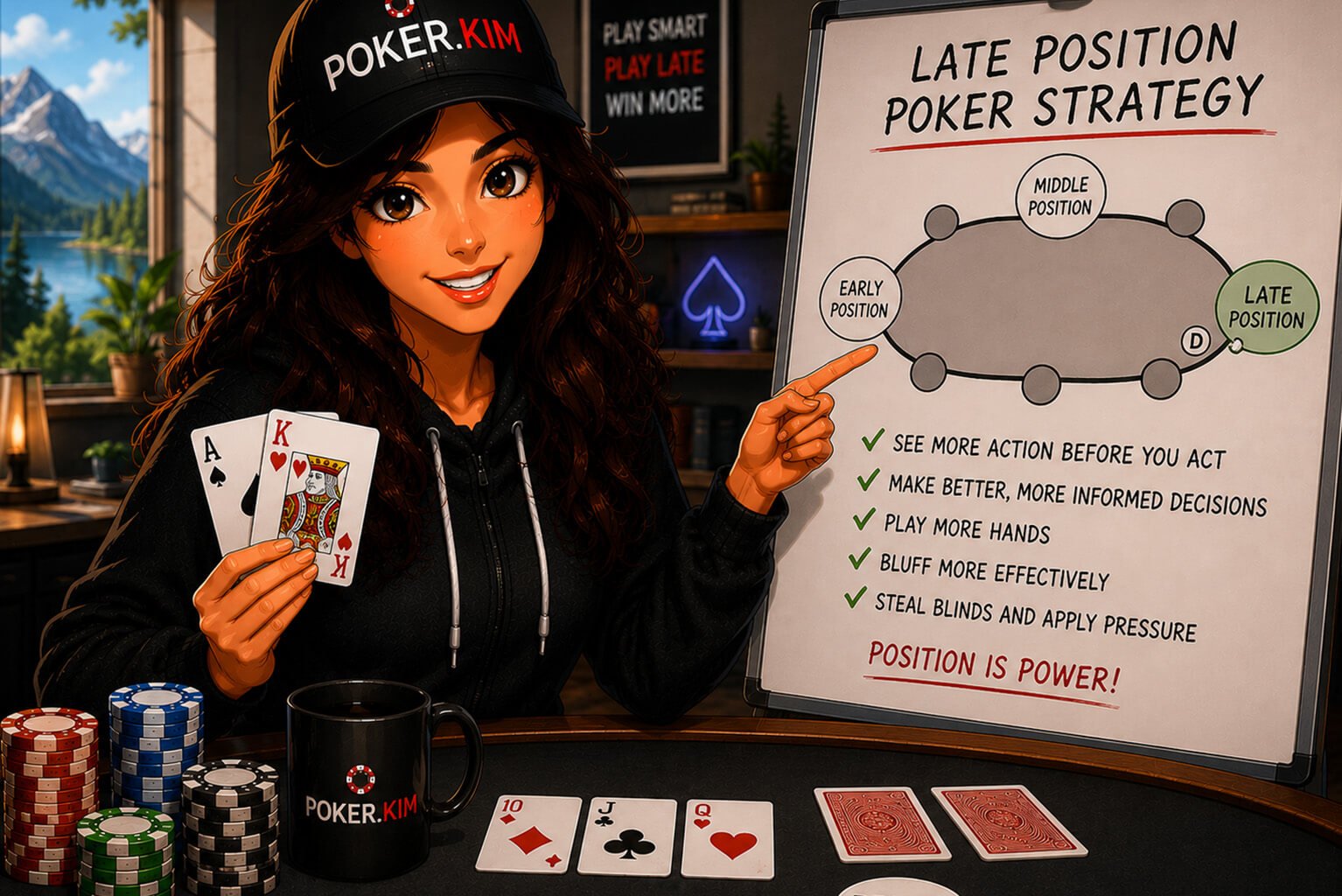
Poker is a game of strategy, psychology, and timing. One of the most important aspects of successful play is understanding the value of your position at the table. Among the various positions, late position poker stands out as a crucial advantage that every player should learn to leverage effectively. Whether you’re a beginner just starting out or looking to sharpen your game, mastering late position play can significantly improve your overall results.
What Is Late Position in Poker?
In a typical poker game, the seating order and the dealer button determine the position of each player. The term “position” refers to where you sit relative to the dealer button, which moves clockwise after each hand. Late position generally includes the two seats immediately to the right of the dealer button (commonly called the cutoff and the button). In some games, the button itself is considered the prime late position.
To simplify, if you imagine the dealer button as “last to act,” the late positions are those closest to that button and act after most of the players have made their decisions. Acting later in the betting round provides several strategic advantages, which we’ll explore in detail.

Why Is Late Position Poker So Important?
Position is one of the most valuable factors in poker because it controls when you act during a betting round. Being in late position means you have a better idea of your opponents’ intentions since they act before you. This information allows you to make smarter decisions.
- Control Over the Pot: Acting last lets you decide how much to bet or whether to check, giving you control over the size of the pot.
- More Information: You see how other players act first, which can give clues about their hand strength.
- Bluffing Opportunities: It’s easier to bluff when you have more information and the chance to act last.
- Better Hand Selection: You can widen your starting hand range in late position because you have positional advantage post-flop.
How to Play From Late Position: A Beginner’s Guide
Playing from late position requires a mix of solid fundamentals and adaptable strategies. Here’s a straightforward approach for beginners:

1. Open Up Your Starting Hand Range
From early position, you want to play tight (only strong hands) because players acting after you can have stronger hands. But from late position, you can comfortably include more hands in your opening range. This can include suited connectors, small pairs, and more broadway cards like KQ or JT.
Example: Suppose you’re on the button, and no one has raised before you. You can raise with hands like 76 suited or A9 offsuit profitably, thanks to your positional edge post-flop.
2. Use Position to Steal Blinds
Late position is a great place to steal the blinds by raising when everyone before you has folded, especially from the button. Many players will fold their small and big blind to a raise if they don’t hold a strong hand, giving you free chips.
3. Play Aggressively but Smart
Being in late position allows you to use aggression effectively through raises and bets. This aggression can pressure opponents and help you take down pots without often seeing a showdown. Just be mindful of your table image and opponents’ tendencies.
4. Pay Attention to Opponents’ Playing Styles
Use your late position to gauge your opponents better. Are they playing tight? Loose? Aggressive? Passive? Adjust your strategy accordingly. Bluff less against players who rarely fold in late position.

Practical Example: Late Position Poker in Action
Imagine you are on the button in a $1/$2 no-limit Texas Hold’em game. The action folds around to you, and you pick up A♠ 9♠. In early position, this hand might be marginal. But here, you notice both blinds are tight players who fold often.
You decide to raise to $6 and both blinds fold. You win the pot immediately without seeing the flop. This is leveraging late position to steal blind chips, increasing your chip stack over time.
Now, suppose the small blind calls instead. You’re still in position; you get to see the flop last. If the flop comes K♦ 7♠ 3♠, you have a flush draw and one overcard (the Ace). You can decide whether to bet or check based on the small blind’s tendencies and actions, using your positional advantage.
Common Mistakes to Avoid in Late Position
1. Overplaying Weak Hands
Even in late position, not all hands are worth raising or calling. Avoid playing junk hands just because you’re “doing it from late position.” Know the difference between playable speculative hands and those likely to cause you trouble.
2. Failing to Adjust to Opponents
Don’t assume late position always equates to easy wins. Some tables have aggressive players who will 3-bet or trap. If you know opponents can exploit loose raises from late position, tighten up or mix in some slower plays.
3. Overusing Bluffing
Bluffing is a powerful tool from late position, but too much of it damages your credibility. Mix bluffs with solid value bets to keep opponents guessing.
Read Also: Middle Position Poker Strategy
Advanced Late Position Strategies
Once you’re comfortable with basic late position play, you can explore more nuanced tactics:
- 3-Betting Light: Occasionally 3-betting (re-raising) with hands that aren’t premium but have good playability, especially against players who open wide ranges from early positions.
- Floating: Calling a bet with the intention of taking the pot away on later streets, leveraging your positional advantage.
- Manipulating Pot Size: Controlling bet sizing to keep weaker hands in or to push out stronger draws, depending on how deep the stacks are.

Summary: Leveraging Late Position Poker
Late position poker is one of the most powerful advantages in the game. By acting after most opponents, you gain invaluable information and control, enabling you to play a wider range of hands effectively and to pressure opponents wisely. Remember these essentials when playing late position:
- Expand your starting hands wisely.
- Use late position to steal blinds and isolate weaker players.
- Stay aggressive but avoid overplaying weak hands.
- Adapt to the table dynamics and opponent tendencies.
- Mix value bets and bluffs to remain unpredictable.
By incorporating late position strategies into your play, you’ll see improved results and a deeper enjoyment of poker. Practice regularly, stay observant, and always remember—the cards you hold matter, but where you sit at the table matters just as much.
Editorial Note
Poker.kim uses artificial intelligence to assist with some content, including illustrations and draft text. Every article is reviewed, edited, and approved by our editorial team before publication.
If you spot an error or outdated information, we’d appreciate hearing from you so we can improve our content.