
Poker is a game of skill, strategy, and a bit of luck. If you’re new to the game, one of the fundamental things you need to grasp is the ranking of poker hands. Understanding these rankings not only helps you make the best decisions during a game but also boosts your confidence when playing. One of the most basic yet important hands you’ll encounter is one pair poker. This article breaks down what “one pair” means, how it fits into the poker hand hierarchy, and how to play when you have it.
What Does One Pair Mean in Poker?
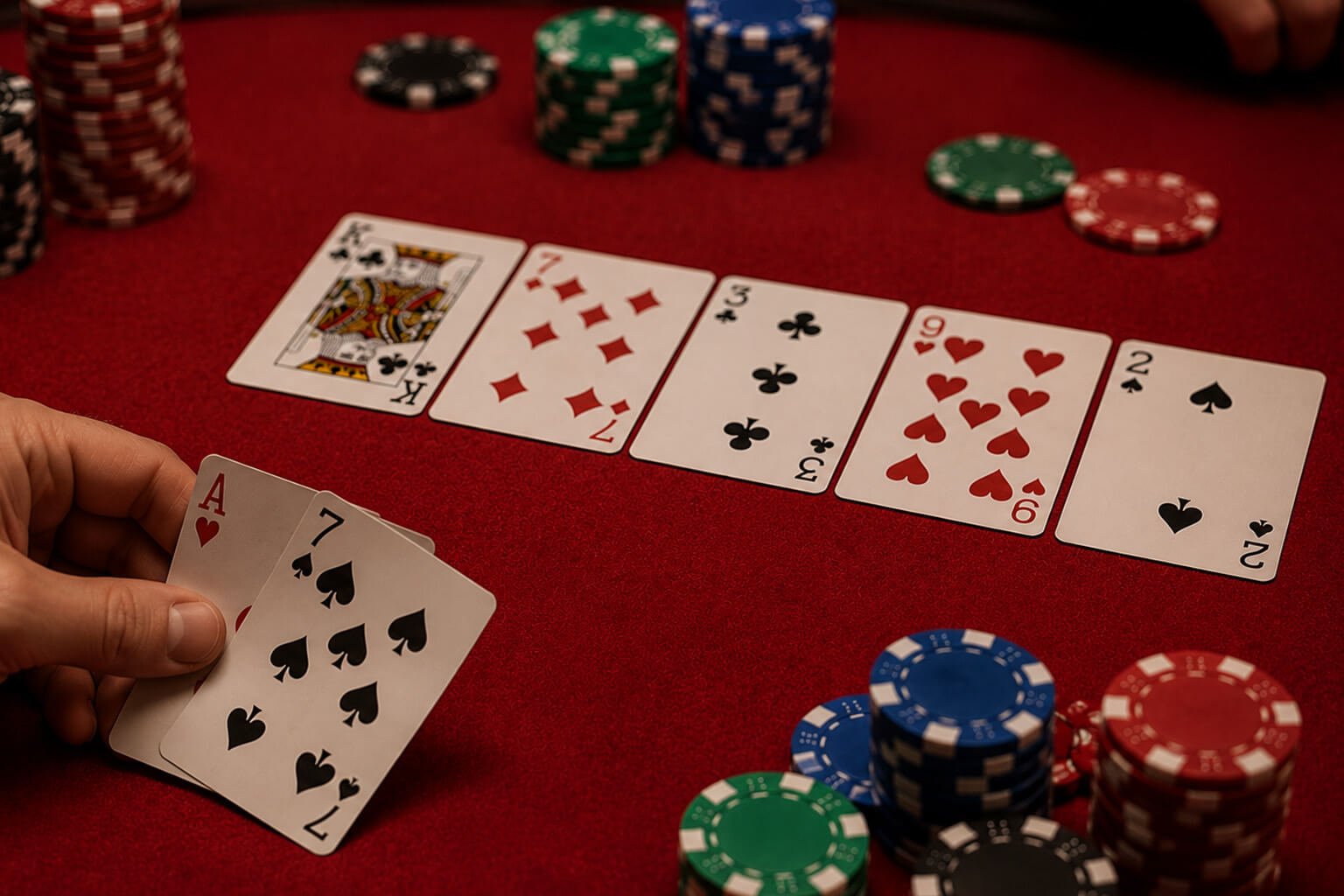
In simple terms, one pair refers to having exactly two cards of the same rank in your five-card poker hand. For example, if you hold two 7s, that’s a pair of sevens. The other three cards in your hand are simply known as “kickers” and can influence the strength of your hand if another player also has a pair.
To be clear, a one pair hand is made up of:
- Two cards with the same rank (e.g., two Kings, two 4s)
- Three other different cards of varying ranks
Here’s an example of a one pair poker hand:
7♦ 7♣ K♠ 10♣ 3♥
In this case, the pair is sevens, and the other cards are King, Ten, and Three.

How Does One Pair Rank in Poker Hand Rankings?
Poker hands are ranked based on the rarity and strength of each combination. From highest to lowest, the general hierarchy includes:
- Royal Flush
- Straight Flush
- Four of a Kind
- Full House
- Flush
- Straight
- Three of a Kind
- Two Pair
- One Pair
- High Card
As you can see, one pair is one of the lower-ranked hands, but it’s still better than just a high card. This makes it a decent starting point for many hands, especially in games like Texas Hold’em. Even though one pair isn’t the strongest hand you can get, it can still win if your opponents don’t have better combinations.
Read also: What beats what in Poker?
Why Is One Pair Important for Beginners?
For beginner players, one pair is crucial for a few reasons:
- Frequent occurrence: It’s the most common type of winning hand, so you’ll see and use it often.
- Easy to recognize: Recognizing when you have a pair is straightforward, making it an important basic skill.
- Strategy foundation: Learning when to bet, fold, or raise with a pair helps you develop core poker skills.

Understanding the Strength of One Pair Hands
Not all pairs are created equal. In poker, the rank of the cards determines the strength of your one pair. For example, a pair of Aces beats a pair of 2s. If two players have the same pair, the winner is decided by the value of the remaining cards, called kickers.
Let’s look at a practical example:
Player 1: Q♠ Q♦ 10♣ 9♥ 3♠
Player 2: Q♥ Q♣ J♠ 7♦ 2♣
Both players have a pair of Queens, so we compare the kickers:
- Player 1’s highest kicker: 10
- Player 2’s highest kicker: J
Player 2 wins because their highest kicker (Jack) beats Player 1’s (Ten).
How to Play One Pair Hands
Knowing you have one pair is just part of the story. How you play it depends on various factors, including the type of poker you’re playing, your position at the table, and the betting behavior of your opponents.
Playing One Pair Pre-Flop
In games like Texas Hold’em, your hole cards give you your initial hand. If you start with a pair (called a pocket pair), it could give you an advantage.
Example: If you have 9♦ 9♠ before the flop, you start with a pocket pair. Pocket pairs can be valuable, especially if they’re higher pairs like Jacks or better. Lower pocket pairs (like 3s or 4s) might not be as strong on their own, but they can still hit a set (three of a kind) after the flop, which significantly strengthens your hand.

Playing One Pair Post-Flop
After the community cards are dealt, one pair might be made from a combination of hole cards and board cards. The key thing to watch out for is the strength of your pair relative to the board and other potential hands your opponents might have.
For instance, if the board shows A♦ K♠ 7♣ 4♥ 2♣ and you hold 7♦ 10♦, you have a pair of sevens. But if an opponent has A♠ Q♠, their pair of Aces beats your pair. So, sometimes having one pair isn’t strong enough to continue betting aggressively.
Practical Tips for Playing One Pair Hands
- Be cautious with low pairs: If your pair is low, watch out for higher pairs or potential straights and flushes from opponents.
- Use position to your advantage: If you’re acting last and have one pair, you can observe others’ actions and decide whether to bet, call, or fold.
- Pay attention to the board: If the flop or turn brings straight or flush possibilities, a one pair hand can be vulnerable.
- Size your bets wisely: Aggressive betting with a weak pair can push you out of the pot, while timid betting might invite opponents to see more cards cheaply.
Common Mistakes to Avoid with One Pair
Even though one pair is a basic hand to understand, many beginner players make errors when playing it:
- Overvaluing small pairs: Calling big bets with a weak pair can cost you chips against stronger hands.
- Ignoring board texture: Not considering how the community cards change the strength of your hand.
- Chasing hands too much: Staying in a hand with one pair without potential for improvement can lead to losses.
Summary: One Pair Poker is a Fundamental Building Block
One pair in poker is an essential hand to understand, especially for beginners. It’s simple to identify and can be surprisingly powerful depending on the situation and how you play it. While it’s not a guaranteed winning hand, knowing when one pair is strong enough to bet or when to fold can make a big difference in your overall game.
Remember, poker is not just about the cards you hold, but the decisions you make. So, next time you’re in a hand with one pair poker, take a moment to consider the strength of your pair, your position, and what the board looks like. That thoughtful approach will help you make smarter plays and enjoy the game even more.