
When you’re learning poker, a lot of focus is placed on the cards you’re dealt or the various betting moves you can make. While both are important, one of the most crucial aspects that often goes unnoticed by beginners is position. Understanding why position matters poker games can dramatically improve your strategy, making you a smarter and more profitable player at the table.

What Does Position Mean in Poker?
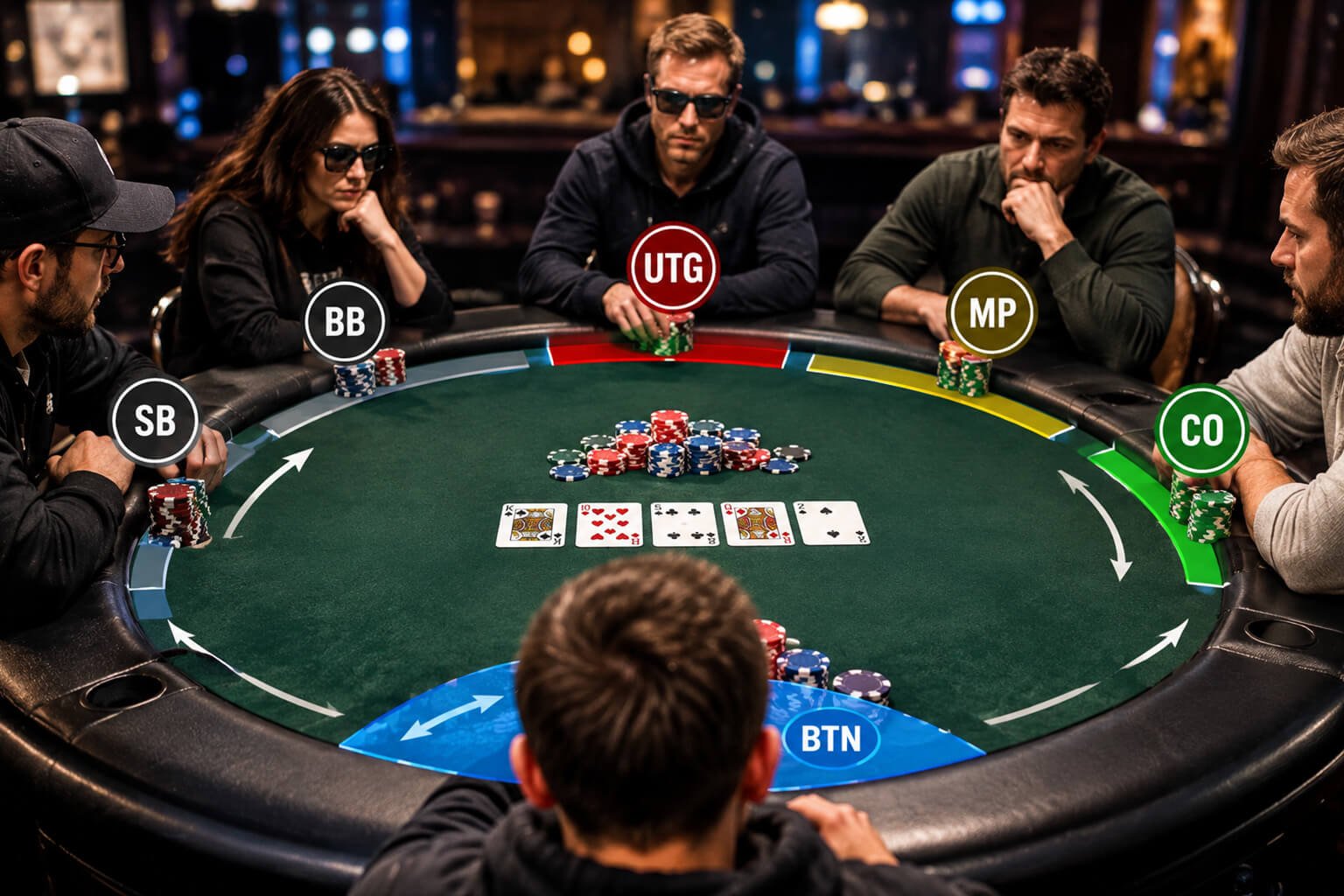
In poker, position refers to where you sit relative to the dealer button. The dealer button rotates clockwise every hand, sitting in front of a particular player. This position determines the order in which players act during betting rounds.
Positions in poker are commonly categorized into:
- Early Position (EP): These players act first after the blinds. This includes seats immediately to the left of the big blind.
- Middle Position (MP): These players act after early position players but before late positions.
- Late Position (LP): This includes the cutoff (one seat to the right of the dealer) and the dealer/button position itself, acting last on each post-flop betting round except preflop where the blinds act last postflop.
Where do you want to be at the poker table?
Why Position Matters in Poker: The Basics
Playing in position means you get to see what your opponents do before you make your move. This is a massive advantage because poker is a game of incomplete information — you never know what cards your opponents hold. Acting last gives you more information to make decisions.
Imagine playing in early position. You have to act without knowing what everyone after you plans to do. If several players raise or just call, you’re left guessing what they might have and how strong their hands are. On the other hand, in late position, you get to observe those players’ actions first.
Practical Example: Why Acting Last Helps
Suppose you are dealt A♠K♠ in middle position. Two players before you fold, and one player makes a small raise. If you were in early position, you’d have to guess their strength and decide. But in late position, maybe the players before you have folded or just called, giving you more clarity about what you’re up against. With this info, you can choose to raise, call, or fold more confidently.

Positional Advantage on Different Streets
As you move through the betting rounds — preflop, flop, turn, and river — your position affects your decisions differently. Generally, the later you act, the better your advantage.
Preflop
Before any community cards are dealt, acting last lets you see how many players enter the pot and at what amount. You might tighten your range in early position because you don’t have info, but you can play a wider range of hands in later position, including speculative hands like suited connectors or small pairs, knowing you act last.
Flop and Beyond
The flop, turn, and river are where lots of big decisions happen. With position, you can control the size of the pot, bluff when appropriate, and get more value from your strong hands. Acting last means deciding whether to check, bet, or fold based on the precise actions of your opponents.
How Position Affects Poker Strategy
Understanding your position allows you to adjust your strategy effectively in these ways:
- Starting Hand Selection: You can play tighter in early positions and looser in late positions.
- Bluffing Opportunities: Bluffing is safer when you act last because you can gauge if others show weakness.
- Pot Control: Being in position helps you keep pots smaller with marginal hands and build pots with premium hands.

Take the Button Everywhere
Stay one step ahead with the Dealer Button cap from REBUYGEAR. Inspired by the most powerful seat at the poker table, this cap is perfect for players who know that position is everything. Whether you’re heading to the card room, a home game, or just out and about, it’s a stylish way to show your passion for poker. Explore this design and a wide range of poker-inspired apparel and accessories from REBUYGEAR.
Example: Adjusting Hand Range Based on Position
Imagine you have 9♦10♦. From early position, this hand is risky due to many players acting after you with unknown strength. But in late position, especially if the action folds to you, this hand becomes more playable. You can raise or call, knowing you will see your opponents’ moves before acting.
Common Mistakes Related to Position
Beginners often overlook position or underestimate its importance. Here are some frequent errors to avoid:
- Playing Too Many Hands Early: If you don’t respect position, you might call or raise too often from early seats, putting yourself in tough spots later.
- Failing to Adjust Postflop: Sometimes players act the same regardless of position, missing chances to bluff or capitalize on information.
- Misreading Opponents in Position: While having position is an advantage, it doesn’t make you invincible. Always stay attentive to betting patterns and player tendencies.
Tips for Using Position to Boost Your Poker Game
Here are practical tips that incorporate positional awareness:
- Play Tighter Early, Looser Late: Stick to premium hands upfront, but open up your range when acting last.
- Use Position to Gather Info: Observe how players bet before you act, and adapt your response accordingly.
- Aggression from Late Position: When it’s folded to you on the button or cutoff, consider raising with a variety of hands to steal blinds and take control.
- Be Patient in Early Position: Sometimes folding a decent hand is smart when you have little info.
- Practice Positional Awareness: Make it a habit to note your spot and think about how it impacts your strategy every hand.
Why Position Matters Beyond Cash Games
The concept of position is vital for all poker formats, including tournaments and cash games. In tournaments, playing well in position can conserve chips and help navigate tricky situations. In cash games, it enhances your ability to extract value and minimize losses.
In fact, professional players often say that position can be the difference between a winning and losing session, regardless of the cards dealt.
Summary
To sum up, why position matters poker is simple yet profound: acting last gives you more information, control, and flexibility. It affects every major part of your poker strategy — from the hands you play to how you bet postflop.
By respecting position and adjusting your play accordingly, you’ll not only improve your win rates but also enjoy a deeper understanding of the game. Next time you sit at the table, remember that sometimes where you sit matters just as much, if not more, than what you hold.
Editorial Note
Poker.kim uses artificial intelligence to assist with some content, including illustrations and draft text. Every article is reviewed, edited, and approved by our editorial team before publication.
If you spot an error or outdated information, we’d appreciate hearing from you so we can improve our content.