
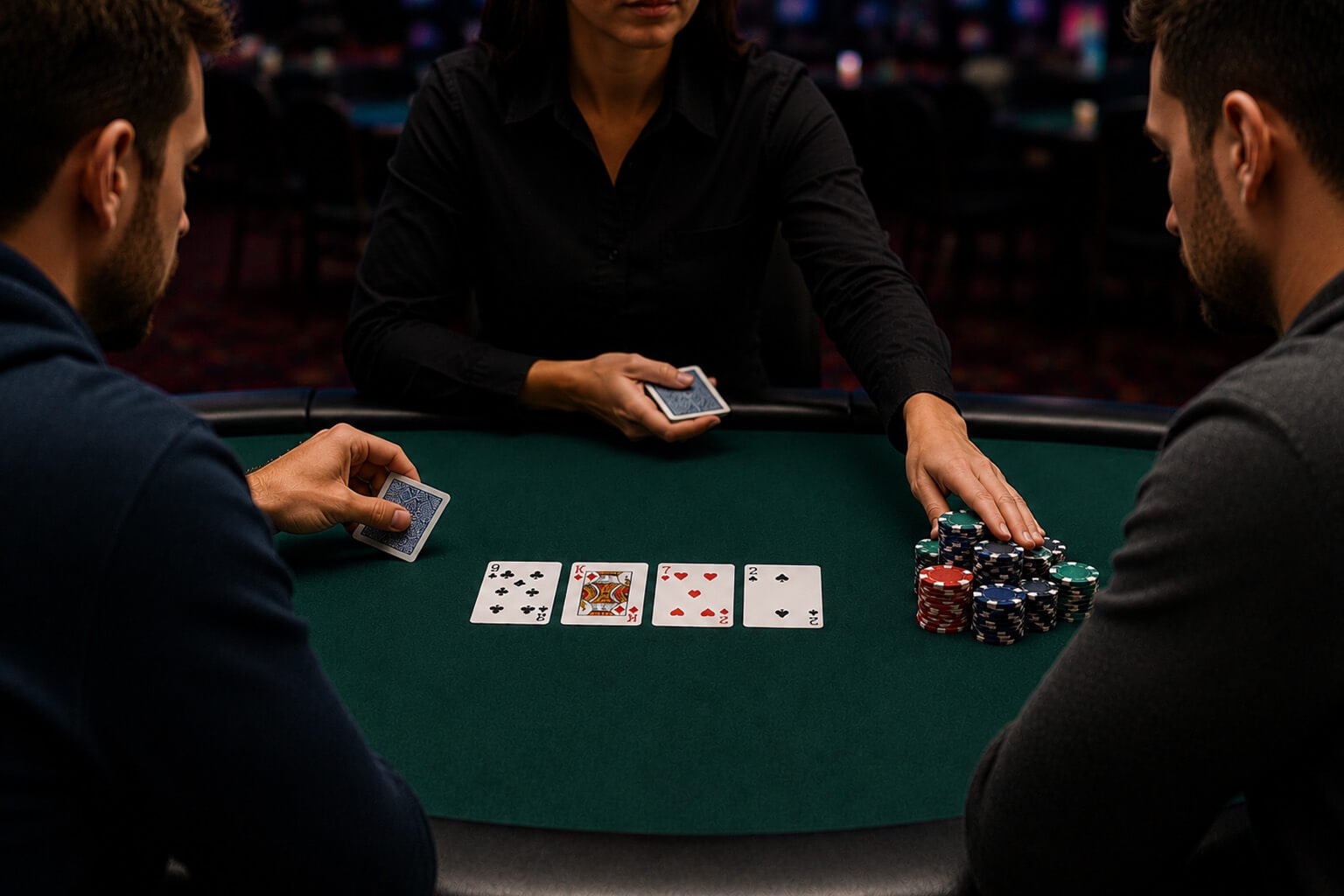
Poker is a game full of drama, strategy, and sometimes, a little curiosity that can lead players down interesting rabbit holes. One such curious habit you might hear about at the poker table is rabbit hunting. If you’re new to poker or just want to understand what rabbit hunting means, this guide will walk you through everything you need to know in simple, straightforward terms.
What Is Rabbit Hunting in Poker?
In poker, rabbit hunting refers to a player or dealer revealing the next cards that would have come out if a hand had continued, even though the hand ended prematurely. Essentially, it’s about looking at the cards that weren’t dealt during a stopped hand, to see what could have happened.
For example, imagine you fold on the flop or turn, but then you ask the dealer to go on and show you the remaining community cards as if the hand had played out fully. That act of revealing those hypothetical cards is called rabbit hunting.

Why Do Players Rabbit Hunt?
Rabbit hunting is usually driven by curiosity or a bit of emotion. Players often want to know:
- What might have happened if they had stayed in the hand. Did they miss a winning card?
- Was their fold a good decision? Sometimes seeing the “what if” cards can help players analyze their decisions.
- Just for entertainment. Watching the next cards can be exciting, especially in friendly games.
However, it’s important to understand that rabbit hunting is generally discouraged in formal games and tournaments. It can slow the game down, give away information to other players, and disrupt the flow of play.
How Rabbit Hunting Works in a Poker Game
During a poker hand, there are community cards dealt on the board—these include the flop (three cards), the turn (one card), and the river (one card). For example, in Texas Hold’em:
- The flop reveals 3 cards.
- The turn adds a 4th card.
- The river adds the 5th and final community card.

Now, if the hand ends early, say a player folds on the flop, the dealer may or may not reveal the next community cards—turn and river—that would have been dealt. If they do, that’s rabbit hunting.
Here’s a practical example:
Imagine you are dealt 7♦ 8♦, and the flop comes 9♠ 10♥ 2♣. You decide to fold, but then you wonder if continuing might have given you a straight. If the dealer shows the next cards (turn and river), say J♣ and Q♦, suddenly you see that you would have completed a straight (7-8-9-10-J), which might make you regret folding.
Is Rabbit Hunting Allowed?
Whether rabbit hunting is allowed depends on the poker room or game rules. Here are some general guidelines:
- Home games: Rabbit hunting is often more relaxed here and might be allowed if everyone agrees.
- Casinos and card rooms: Most tournaments and cash games prohibit rabbit hunting because it slows the game and gives information advantage to other players.
- Online poker: It depends on which client you play on, some clients also charge extra for rabbithunting
Remember, even if it’s allowed, it’s good etiquette to avoid rabbit hunting during serious play, as other players might get frustrated by it.

Benefits and Drawbacks of Rabbit Hunting
Benefits
- Learning opportunity: Seeing the next cards can help beginner players understand what hands might beat them or what cards to look for.
- Emotional closure: If you fold a hand, sometimes rabbit hunting helps with curiosity and frustration—giving you closure about what you missed out on.
- Fun factor: It can add some excitement and informal enjoyment, especially in casual games.
Drawbacks
- Slows the game down: Revealing extra cards takes time and can disrupt the pace of play.
- Reveals information: Other players can gain insights into the deck or players’ hands based on the cards revealed, which affects fairness.
- Encourages bad habits: Focusing too much on “what if” scenarios can lead to poor decision-making and chasing losses emotionally.
Common Misconceptions About Rabbit Hunting
Rabbit hunting is cheating: This isn’t true. While it may not be encouraged, rabbit hunting itself is not cheating unless it disturbs the game or violates rules.
Rabbit hunting helps you win more: While it may feel educational, relying on rabbit hunting to make decisions is not a solid poker strategy. Actual decisions should be based on the cards you have and betting patterns, not on hypothetical card reveals.
Rabbit hunting is allowed everywhere: As covered, many serious poker games prohibit rabbit hunting to maintain pace and fairness.
Alternative Ways to Improve Without Rabbit Hunting
If you find yourself rabbit hunting because you want to learn and improve your game, here are stronger and more effective ways to do so:
- Review hand histories: Many online poker sites save your hand histories. Reviewing these helps you understand where you made good or bad decisions without relying on luck.
- Use poker software and tools: Tools like equity calculators and solvers can show you how well your hand performs against range of opponents’ hands.
- Discuss with other players: Join forums or poker communities where you can review and analyze hands to learn better strategies.
- Practice patience and focus: Improving your reading of opponents and patience at the table is a better long-term strategy than wondering what cards might have come next.

Conclusion
Rabbit hunting poker is an interesting and somewhat old-school poker habit that involves revealing cards that would have come after a hand ends, just to satisfy curiosity or seek “what if” answers. While it might be fun and educational in casual or home games, it is generally discouraged or outright banned in formal games and tournaments due to the disruption it causes.
For beginners, it’s important to focus on fundamentals like understanding hand rankings, betting strategies, and reading opponents rather than dwelling on cards that didn’t come out. Poker is ultimately a game of incomplete information and making the best decisions with what you have. Avoiding rabbit hunting will help you develop discipline, patience, and better strategic thinking, which are crucial for becoming a successful player over time.
Next time you find yourself tempted to ask the dealer for “just one more card,” remember: the real game is about playing the cards in your hand, not chasing the cards that never arrived.