
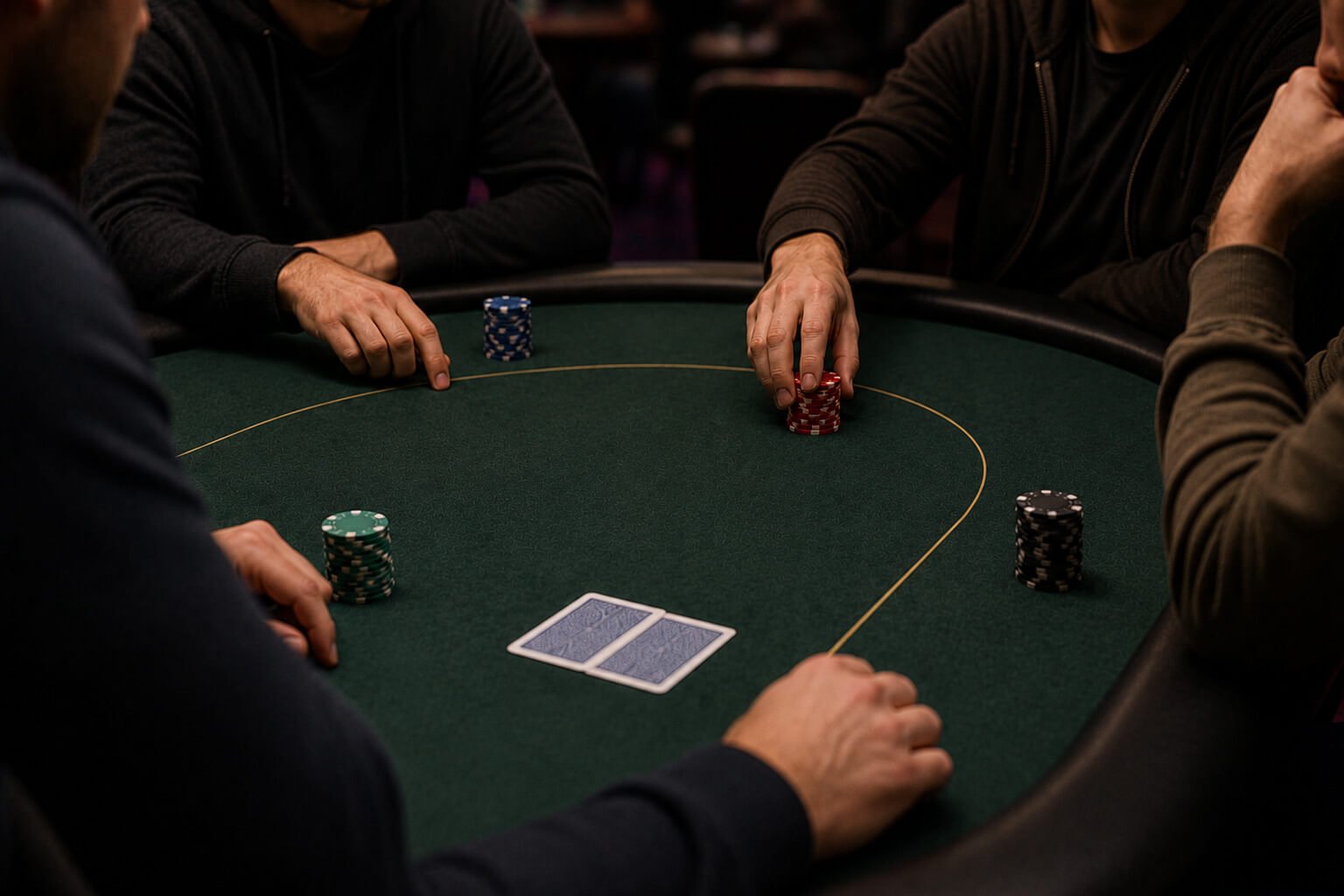
When you’re learning poker, you’ll often hear terms thrown around that might sound confusing at first. One such term is straddle. Understanding what a straddle is and how it works can give you a better grip on poker strategy, especially in cash games and live play. In this article, we’ll break down straddle poker in a simple, beginner-friendly way and explore why and when players use it.
What Is a Straddle in Poker?
A straddle in poker is a voluntary blind bet that a player makes before the cards are dealt. It’s essentially an optional raise that happens pre-flop, before any betting action begins. Usually, the player who straddles is allowed to act last before the flop comes out, gaining the advantage of seeing how other players respond before making their decision.
To understand this better, let’s start with the basics of betting in poker.

Understanding Blinds and Betting Order
In games like Texas Hold’em and Omaha, there are forced bets called the “small blind” and the “big blind.” These bets get the pot started and create action. Typically, the player to the left of the dealer posts the small blind, and the next player posts the big blind, which is usually double the small blind.
The betting usually begins with the player to the left of the big blind, moving clockwise around the table. But when a player straddles, they put in an extra blind bet, usually double the big blind, before cards are dealt. This changes the betting order and adds a twist to the game.
How Does Straddle Poker Work?
Here’s a simple example to explain straddling:
- Imagine a 6-player game with a $1 small blind and $2 big blind.
- The player under the gun (the first to act pre-flop) decides to put in a straddle bet of $4, which is double the big blind.
- Since the straddle is placed before the cards are dealt, the blind bets now look like this:
- Small blind: $1
- Big blind: $2
- Straddle (under the gun): $4
- The betting starts with the player immediately to the left of the straddler.
- The straddler acts last pre-flop, giving them a strategic advantage.

Straddling effectively makes the straddler’s bet a live blind that must be matched or raised by other players before they act. It’s like saying, “I’m raising the stakes, and I want to be the last to make a decision before the flop.”
Different Types of Straddles
Not all straddles are the same. Here are some common types you may come across:
- Live Straddle: The standard straddle, where the player puts in a bet double the big blind before the cards are dealt and acts last pre-flop.
- Mississippi Straddle: This is a popular format where a player can straddle from any position at the table, not necessarily under the gun.
- Button Straddle: The player on the dealer button puts in the straddle bet, often to increase action and make the game more exciting.
- Double Straddle: In rare cases, a player may put in a straddle double the usual amount, tripling the big blind to further increase the pot size.
- Jungle Man Straddle: An informal term for straddling multiple times or significantly increasing the straddle bet to create high variance.
Why Do Players Straddle in Poker?
Straddling is a strategic move with several purposes:
- Build the Pot: Straddling instantly increases the size of the pot, making the game more exciting and potentially more profitable for aggressive players.
- Gain Positional Advantage: The straddler acts last before the flop, which is a strong strategic spot. Seeing how others act first allows the straddler to make more informed decisions.
- Apply Pressure: By raising the stakes before seeing cards, the straddler puts opponents on the defensive, potentially forcing tighter play.
- Create Action: Straddling encourages bigger pots and more betting action, especially in casual or live games where players want to keep the game lively.
Is Straddling Good Strategy for Beginners?
While straddling can be fun and add excitement to the game, it’s not always a good idea for beginners. Here’s why:
- It Costs More Money: Straddling means committing extra chips before you see your cards, which can quickly drain your stack if you’re not careful.
- Complex Decision-Making: Acting last pre-flop is an advantage, but it also demands a good understanding of poker strategy, hand ranges, and opponent tendencies.
- Can Encourage Loose Play: Sometimes players straddle just to spice things up, but this can lead to sloppy decisions and losing money in the long run.
If you’re new to poker, it’s best to learn solid fundamentals—betting, hand selection, reading opponents—before adding straddling into your arsenal.
Practical Example: Playing with a Straddle
Let’s look at an example of a hand with a straddle to illustrate how it influences betting:
- Blinds: $1 small blind, $2 big blind
- Player 1 (under the gun) straddles $4
- The action starts with Player 2 (to the left of the straddler)
Player 2 folds, Player 3 calls the $4, Player 4 raises to $10, Player 5 folds, Player 6 calls $10, the small blind folds, and the big blind calls $10.
It’s now Player 1’s turn (the straddler). They have information from five players who have already acted. Player 1 can now choose to fold, call the $10 raise, or re-raise. Acting last means Player 1 can adapt their strategy optimally based on others’ actions.
When Is Straddling Most Common?
Straddling is mostly seen in live cash games and casual poker settings rather than in formal tournaments because:
- Tournament structures often prohibit straddling since it increases variance and can unfairly favor players with larger stacks.
- Live cash games encourage straddling to keep pots larger and maintain excitement.
- It can be popular in home games or casinos where players are looking for extra action.
Some Important Rules About Straddling
Before you start straddling, be aware of these common house rules:
- Straddles must be posted before cards are dealt and before the big blind acts.
- Only one straddle is usually allowed per hand (unless playing specific variants that allow multiple straddles).
- The straddler acts last pre-flop but takes the usual action order after the flop.
- Straddling is optional, not mandatory.
- Minimum straddle amount is usually double the big blind, but this can vary by casino or house rules.
Final Thoughts: Should You Try Straddling?
Straddle poker can be a thrilling and strategic part of the game. It increases the stakes and gives you the advantage of acting last before the flop. However, it also comes with increased risks and demands solid poker skills to pull off successfully.
If you’re a beginner, consider watching games with straddles or trying it out during low-stakes play to see how it changes the dynamics. Focus on understanding how to use your position and how straddling affects hand ranges and betting patterns.
Once you get comfortable with basic poker strategy, straddling can add a new layer of excitement and potentially boost your winnings. Just be sure to manage your bankroll carefully and avoid straddling impulsively.
Next time you play, pay attention if someone straddles and watch how it changes the flow of the game — it’s a fascinating part of poker that every player should know about.